Get involved!
Help us expand the Workers Control Archive!
If you think you have some interesting text or content is missing:
Get in contact ›››
Recommended articles
 An examination of the worker cooperative as an example of a labour commons. The authors suggest that the radical potential of co-ops can be extended by connecting with other commons struggles.
|
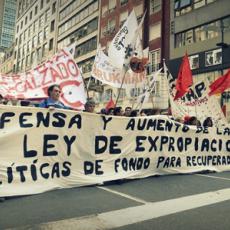 In Argentina, the government attempted to ‘institutionalise’ the occupied factories, de- politicising the radical aspects of workers’ actions in exchange for financial and technical assistance.
|
 Workers' management is not just a new administrative technique: it means that for the mass of people, new relations will have to develop with their work, the very content of work will have to alter.
|
 Some currents argue that the experience of small-scale self-management under capitalism is useful preparation. However, self-management is impossible without real socialist democracy.
|
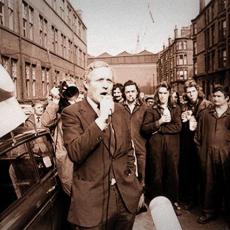 Britain in the 1970s was a period of crisis and polarisation. Workplace closure led to resistance by workers, which defined the relations between capital and labour for subsequent decades.
|