
Get involved!
Help us expand the Workers Control Archive!
If you think you have some interesting text or content is missing:
Get in contact ›››
Recommended articles
 Some currents argue that the experience of small-scale self-management under capitalism is useful preparation. However, self-management is impossible without real socialist democracy.
|
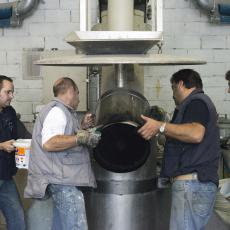 Against the imminent threat of liquidation, the workers of VIOME appeal for international solidarity.
|
 Dismantling the myth that the council communist tradition actually advocated a self-managed capitalist economy, rather than a truly communist one.
|
 Workers' management is not just a new administrative technique: it means that for the mass of people, new relations will have to develop with their work, the very content of work will have to alter.
|
 An article that analyses how far Argentina’s worker-recovered companies have become sustainable production models whilst maintaining their values of equity and workers’ self-management.
|