
Argentina

Argentina

Workers’ control of production has been associated for many years in Argentina with the establishment and diffusion of workers cooperatives. As in many other countries, the emergence of cooperatives represented a form of emancipation for the workers involved and a practical example of an alternative, workers’ owned and directed system of work.However, while the diffusion of consumers and mutual cooperatives, associated with the big waves of European migrations, has accompanied the process of industrialisation in Argentina since the end of the XIX century, the number of producers’ cooperative has been historically limited.

read more »

Immanuel Ness and Dario Azzellini, eds., Ours to Master and to Own: Workers’ Control from the Commune to the Present - Chicago: Haymarket, 2011-

Book Review

Ours to Master and to Own is a compilation of articles offering a historical and global overview of workers’ efforts to gain control over their workplaces, the economy, and governance. It is wonderfully organized in both a chronological and thematic logic, from the nineteenth century through the early twenty-first century, while also moving from a general historical overview toward more specific explanations of how worker democracy was implemented and fought in particular cases. read more »

Immanuel Ness and Dario Azzellini, Ours to Master and to Own - Chicago: Haymarket, 2011

Book Review

The fact that the publisher is Haymarket Publishers indicates that the book under examination is concerned with labor studies. This particular book is an anthology of twenty-two articles by various authors, who specialize in labor movements or the history of workers’ organizations. read more »

Fit für den Markt oder den Markt überwinden? Widersprüche von Genossenschaften & Belegschaftsbetrieben und ihre Bearbeitung

Speech hold the 5th November 2011 at the International Conference: «Den Betrieb übernehmen. Einstieg in Transformation?» / «Occupy, Resist, Produce». Worker Cooperatives – Potential for Transformation?
Panel: Fit für den Markt oder den Markt überwinden? Widersprüche von Genossenschaften & Belegschaftsbetrieben und ihre Bearbeitung

03. - 05.11.2011, Rosa-Luxemburg-Stiftung, Berlin
http://www.rosalux.de/documentation/44505

The Universe of Worker-Recovered Companies in Argentina (2002-2008): Continuity and Changes Inside the Movement

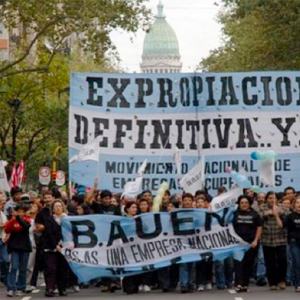
Argentina’s movement of worker-recovered companies (WRC) gained significant public visibility during and in the years following the institutional crisis of December 2001. In light of company shutdowns and dramatic increases in unemployment
rates, many workers promoted the reopening of workplaces abandoned by their owners, giving origin to a movement that still exists to this day. Collectively, the actions centred on workplace and job “recoveries” have made up the distinguishing feature--or the “identity”--of the movement. Even though today’s conjuncture is somewhat different than read more »

Oh Sit Down!

Accounts of sitdown strikes and workplace occupations in the UK and around the world. Compiled by libcom.org - a resource for discontented workers, 2008

Table of contents
2001: Brighton bin men's strike and occupation
2000: Cellatex chemical plant occupation, France
2007: Migrant workers' occupation wins, France
2004: Strike and occupation of IT workers at Schneider Electrics, France
2008: 23 day long occupation of major power-plant in northern Greece ends in police repression
1972: Under new management - Fisher-Bendix occupation
2003: Zanon factory occupation - interview with workers, Argentina read more »

Labour process and decision-making in factories under workers’ self-management: empirical evidence from Argentina

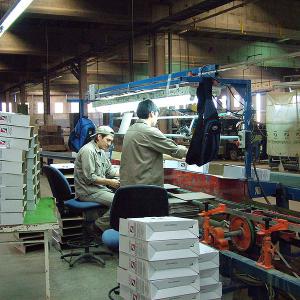
The turn of the century found Argentina in a state of economic and political turmoil. On the one side, the economic downturn experienced by the country between 1998 and 2002, by leaving hundreds of companies in a situation of bankruptcy and thousands of wage-workers facing the prospect of unemployment, threatened the livelihoods of the subaltern classes as a whole. On the other side, the combination of instability in the political alignments and divisions in the ruling elite with a process of popular mobilisation, led to the social upheaval that brought down the Government in December 2001. In this context, thousands of workers gradually began to take control of the machinery, buildings and installations of the factories in crisis or abandoned by their owners, and restarted the production as a mean to guarantee their survival. The occupations were thus originated as a defensive action against job losses in the midst of massive unemployment (Martínez & Vocos 2002) … read more »