
Europe

Workers’ Control in the UK

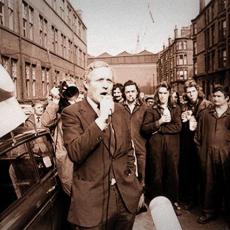
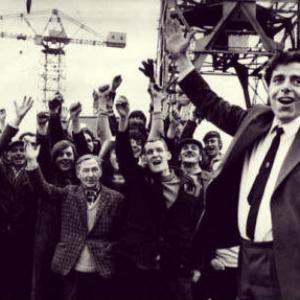
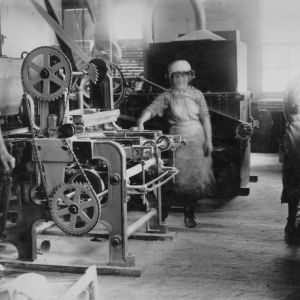
Within the ‘first industrial nation’, which also established the first industrial proletariat, we might trace the workers’ control tradition back to Luddite resistance to mechanisation and de-skilling of established trades around the turn of the 19th century.  Formally demands for workers’ control, both for control within and over the means of production, were raised from the early twentieth century. These initially came with the influence of syndicalist ideas in the emergence of ‘new unionism’ and came to a head with the ‘shop stewards movement’ amongst skilled engineering and shipbuilding workers around the end of wartime production.  A rather more reformist version of workers’ control, ‘guild socialism’ remained significant politically into the 1920s, builders co-operatives or ‘guilds’ being involved in the post-war house-building boom.  read more »

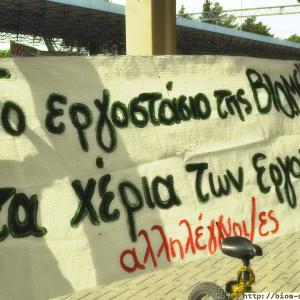
Greek Workers Take Over Factory

An interview direct from Thessaloniki, Greece, where workers have gone into production at a building materials factory abandoned two years ago by its owners.

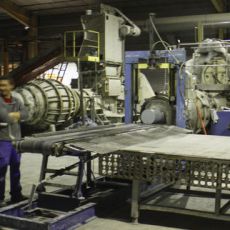
Tuesday February 12, was the first day of production under worker control at Viomichaniki Metalleutiki (Vio.Me), a building materials factory in Thessaloniki, Greece, which was abandoned by its bankrupt owners two years ago. Facing 30% unemployment and a dismal future for their community, workers in a series of mass assemblies decided to occupy the factory and operate it under direct democratic workers’ control.

As part of a letter being circulated by the Thessaloniki Solidarity Initiative explains:
read more »

Occupied Greek Factory Begins Production Under Workers Control. Occupy, Resist, Produce!

“We see this as the only future for worker’s struggles.”
Makis Anagnostou, Vio.Me workers’ union spokesman

Tuesday, February 12, 2013 is the official first day of production under workers control in the factory of Viomichaniki Metalleutiki (Vio.Me) in Thessaloniki, Greece. This means production organized without bosses and hierarchy, and instead planned with directly democratic assemblies of the workers. The workers assemblies have declared an end to unequal division of resources, and will have equal and fair remuneration, decided collectively. The factory produces building materials, and they have declared that they plan to move towards a production of these goods that is not harmful for the environment, and in a way that is not toxic or damaging.
read more »

Anton Pannekoek: Workers Councils

online-publication

"This book has been written in the war years 1941-42 under the occupation of Holland by the Germans. The author, who during many years attentively observed and sometimes actively took part in the workers' movement, gives here a summary of what from these experiences and study may be derived as to methods and aims of the workers' fight for freedom. What a century of workers' struggles presents to us is neither a series of ever again failing attempts at liberalism, nor a steadfast forward march of the workers following a fixed plan of old well-tried tactics. read more »

Gabriel Kuhn (ed.): All Power to the Councils! A Documentary History of the German Revolution

Review by Ralf Hoffrogge

Every schoolchild on the globe knows something about the Russian Revolution from 1917. It was the origin of a state called Soviet Union and a political confrontation later known as the cold war which shaped the 20th century longer than any other political conflict.

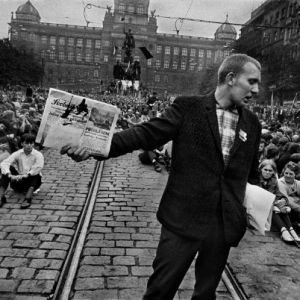
Unlike the crucial events of 1917, the German Revolution of 1918 is not part of the global memory. It did not erect a socialist state as hoped by many of its protagonists and instead ended with a fragile republic that lasted only twelve years and was destroyed by the Nazi Party in 1933. read more »

Between Ignorance and Staging

Review by Ralf Hoffrogge

Henning Fischer, Uwe Fuhrmann, Jana König, Elisabeth Steffen, Till Sträter (eds.):

Zwischen Ignoranz und Inszenierung: Die Bedeutung von Mythos und Geschichte für die Gegenwart der Nation (Between Ignorance and Staging: The Present Significance of Myth and History for the Nation) read more »

Greek hospital now under workers’ control

Health workers in Kilkis, Greece, have occupied their local hospital and have issued a statement saying it is now fully under workers control.

The general hospital of Kilkis in Greece is now under workers control. The workers at the hospital have declared that the long-lasting problems of the National Health System (ESY) cannot be resolved. read more »

Mondragon revisited

In the face of the global financial crisis that has Spain’s unemployment level standing currently at some 22 per cent, the Mondragon co-operatives offer an astonishingly successful alternative to the way we organise business and economies. Revisiting recently for the fifth time, since the early nineteen-eighties, the great complex of worker-owned manufacturing, retail, agricultural, civil engineering and service cooperatives centred on Mondragon in the Basque region of Spain, it was impossible not to be impressed read more »

Vesta

The blog for Vesta.

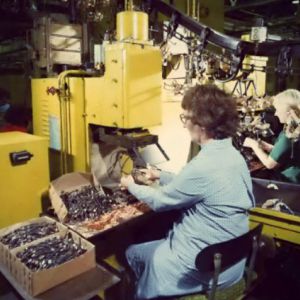
Vestas closed the UK's only wind turbine blade factories, on the Isle of Wight, in August 2009. Workers opposed the closure. This blog is a history of that dispute and of the ongoing campaign for green jobs.