

United Kingdom

Workers’ Control in the UK

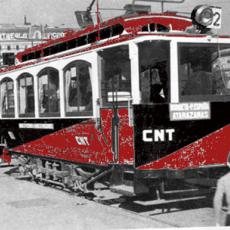
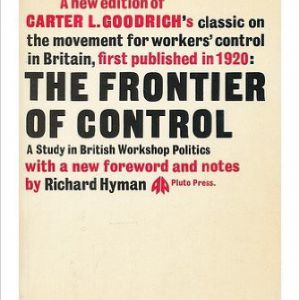
Within the ‘first industrial nation’, which also established the first industrial proletariat, we might trace the workers’ control tradition back to Luddite resistance to mechanisation and de-skilling of established trades around the turn of the 19th century.  Formally demands for workers’ control, both for control within and over the means of production, were raised from the early twentieth century. These initially came with the influence of syndicalist ideas in the emergence of ‘new unionism’ and came to a head with the ‘shop stewards movement’ amongst skilled engineering and shipbuilding workers around the end of wartime production.  A rather more reformist version of workers’ control, ‘guild socialism’ remained significant politically into the 1920s, builders co-operatives or ‘guilds’ being involved in the post-war house-building boom.  read more »

The Grunwick Strike 1976-78

Between Solidary Raise and the Management of Racism

The struggle at Grunwick Photo Processing in London was a sharp industrial struggle initiated by female imigrant workers. Beginning in the summer of 1976 the women workers (mostly from Asia) protested against the racist discrimination articulated in bad payment, miserable working conditions and cruel treatment by the management. read more »

Vesta

The blog for Vesta.

Vestas closed the UK's only wind turbine blade factories, on the Isle of Wight, in August 2009. Workers opposed the closure. This blog is a history of that dispute and of the ongoing campaign for green jobs.

Voices from the Visteon/Ford occupation

Workers occupied to save their redundancy pay and pensions when the factory, one of three component plants hived off from Ford, closed with no notice.

On Tuesday March 31st workers at Visteon factories – making car parts for Ford brands – across the UK were told that Visteon Corp could no longer prop up the UK branch, and so they would all lose their jobs with immediate effect. That night a hundred workers at a plant in west Belfast occupied their workplaces, and the next day were followed by their colleagues in Enfield (north London) and Basildon in Essex. We spoke to a number of the workers involved in the sit-in at Enfield, and have gathered some of the occupiers’ comments below. read more »

New wave of workplace occupations

An article from Richie Venton - the Scottish Socialist Party workplace organiser on the occupations

A rash of factory and workplace occupations is spreading across the globe as workers defy the brutal consequences of the recession.
Instead of surrendering to mass redundancies and outright closures – sometimes at a few minutes’ notice, often without even redundancy packages – workers are occupying their workplaces as a central method of struggling for justice.
Every example that wins concessions is boosting the belief of other workforces that there is an alternative to just resigning to the butchery in the boardrooms – that belligerent, militant class action can win at least something where workers have nothing to lose. read more »

Resisting redundancy and recession: appraising the tactic of occupation

Occupations in Britain after 2000 - A short piece by Professor Gregor Gall who has produced a number of more detailed accounts in academic and political journals

In times of recession and restructuring, the occupation or sit-in tactic is potentially a powerful tool when workers are faced with redundancy because it provides leverage that strikes often cannot. Yet, since late 2007 when the global downturn began, we have witnessed very few examples of occupation – certainly far fewer than might have been expected given the depth and extent of recession. read more »

1976: The fight for useful work at Lucas Aerospace

History of how arms company workers struggled against closure and for a change in their work from weapons manufacture to socially useful production.

In the 1970s workers at the Lucas Aerospace Company in Britain set out to defeat the bosses plans to axe jobs. They produced their own alternative "Corporate Plan" for the company's future. In doing so they attacked some of the underlying priorities of capitalism. Their proposals were radical, arguing for an end to the wasteful production of military goods and for people’s needs to be put before the owners’ profits. read more »

Fighting Plant Closure - Women in the Plessey Occupation 1982

A history of the occupation of the Plessey capacitor plant in 1982 after its closure was announced by 220 women workers.

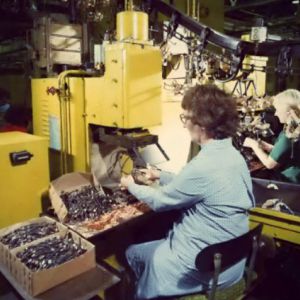
The occupation of the Bathgate plant of Plessey Capacitors in 1982 provides an interesting example of collective action taken by a mainly female workforce against their multinational employer. This particular dispute has important implications both for the involvement of women in industrial action, and for the debate about the most effective strategies to counter the power of multinational corporations, particularly in the case of plant closure.

The material presented here is based on a series of interviews carried out in the period August to November 1983. read more »

The South London Women’s Hospital Occupation 1984-85

Some background on hospital occupations, which goes back to the late 1970s. In the early 1970s both the private and private sector was being restructured: partly in response to IMF directives, and in response to the relatively high wages and defenses (‘restrictive’ work practices that workers built up through the years. This ‘restructuring’ took the form of further centralisation, deskilling, redundancies, productivity deals, speed-ups, casualisation, tougher discipline. This is highly simplified — but we’ll leave it for the time being.

Since this restructuring often involved closures, people began occupying workplaces instead of simply going on strike. read more »

British factory occupations in the 1970s

General accounts

General accounts:

An account of the early phases of the post-UCS occupations in the UK from Workers Liberty, the second part does not seem to have appeared.

Read more on:

http://www.workersliberty.org/story/2009/07/20/british-factory-occupations-1970s

Specific occupations:

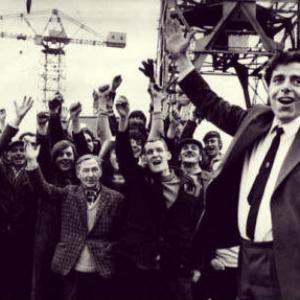
Upper Clyde Shipbuilders: read more »