

Get involved!
Help us expand the Workers Control Archive!
If you think you have some interesting text or content is missing:
Get in contact ›››
Recommended articles
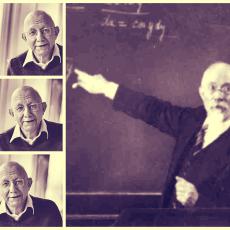 The two theorists, following different trajectories, reached a common conclusion: that the real content of socialism is the complete control of labour by the workers themselves.
|
 Workers' management is not just a new administrative technique: it means that for the mass of people, new relations will have to develop with their work, the very content of work will have to alter.
|
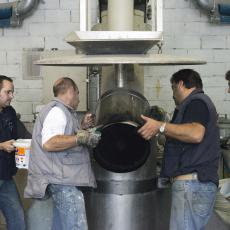 Against the imminent threat of liquidation, the workers of VIOME appeal for international solidarity.
|
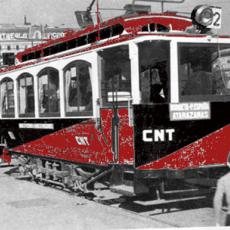 The history of worker management of Barcelona's transit system during the revolution and civil war is an illustration of the ability of workers to directly manage the industries where they work.
|
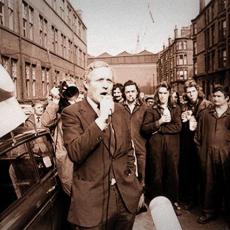 Britain in the 1970s was a period of crisis and polarisation. Workplace closure led to resistance by workers, which defined the relations between capital and labour for subsequent decades.
|