Get involved!
Help us expand the Workers Control Archive!
If you think you have some interesting text or content is missing:
Get in contact ›››
Recommended articles
 Dismantling the myth that the council communist tradition actually advocated a self-managed capitalist economy, rather than a truly communist one.
|
 An interview with members of a structure that provides solidarity financing for cooperatives and worker-run workplaces, to show the possibility of building a new economy.
|
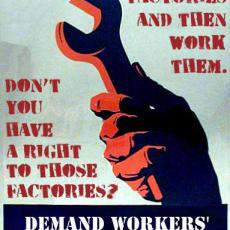 In regard to workplace occupations, the decision relates to workers’ assessments of their situation and their expectations about whether this will bring useful leverage.
|
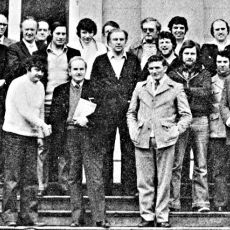 Hilary Wainwright reflects on an attempt by British workers to produce a democratically determined alternative plan for their industry.
|
 When a factory in Thessaloniki was abandoned by its owners in May 2011, the workers decided to occupy it and resume production under workers’ control.
|