
Get involved!
Help us expand the Workers Control Archive!
If you think you have some interesting text or content is missing:
Get in contact ›››
Recommended articles
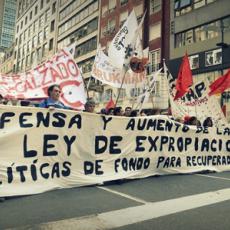 In Argentina, the government attempted to ‘institutionalise’ the occupied factories, de- politicising the radical aspects of workers’ actions in exchange for financial and technical assistance.
|
 Brazilian teacher Henrique T. Novaes looks at advantages and limitations of the Latin American practice of workers trying to overcome capitalist work relations through the control of their workplaces.
|
 Castoriadis stresses his agreement with Pannekoek on the issue of the 'autonomy of the working class' and expresses his disagreement over the role of the revolutionary party.
|
 When a factory in Thessaloniki was abandoned by its owners in May 2011, the workers decided to occupy it and resume production under workers’ control.
|
 This controversy illustrates the difference between the defeated world of ideology and the vibrant and outward-looking world of action that strives to disengage from the dominant relations.
|
Comments
Post new comment