Get involved!
Help us expand the Workers Control Archive!
If you think you have some interesting text or content is missing:
Get in contact ›››
Recommended articles
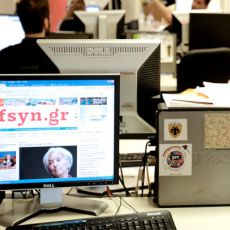 At the 'Journalists’ Newspaper', set up after 'Eleftherotypia' went bankrupt, all 150 media workers are paid the same, the editor works for free and circulation is soaring.
|
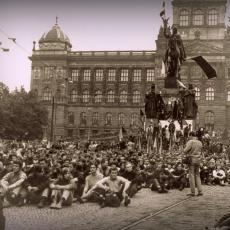 Robert Vitak
|
 The economic crisis that began in 2008 has put workers’ control and workplace democracy back on the agenda in the countries of the northern hemisphere.
|
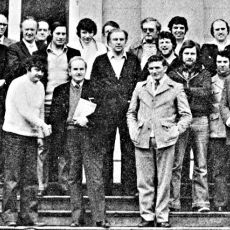 Hilary Wainwright reflects on an attempt by British workers to produce a democratically determined alternative plan for their industry.
|
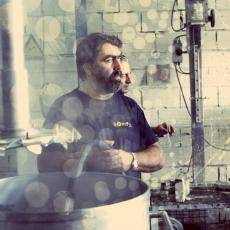 When a factory in Thessaloniki was abandoned by its owners in May 2011, the workers decided to occupy it and resume production under workers’ control.
|