Get involved!
Help us expand the Workers Control Archive!
If you think you have some interesting text or content is missing:
Get in contact ›››
Recommended articles
 Imagine that the algorithmic heart of the "Sharing Economy" could be cloned and brought back to life under a different model of ownership and work conditions, as a humane alternative to the market.
|
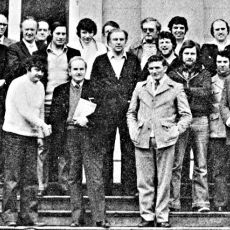 Hilary Wainwright reflects on an attempt by British workers to produce a democratically determined alternative plan for their industry.
|
 At the 'Journalists’ Newspaper', set up after 'Eleftherotypia' went bankrupt, all 150 media workers are paid the same, the editor works for free and circulation is soaring.
|
 An article that analyses how far Argentina’s worker-recovered companies have become sustainable production models whilst maintaining their values of equity and workers’ self-management.
|
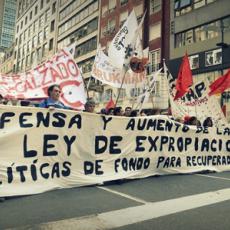 In Argentina, the government attempted to ‘institutionalise’ the occupied factories, de- politicising the radical aspects of workers’ actions in exchange for financial and technical assistance.
|