Get involved!
Help us expand the Workers Control Archive!
If you think you have some interesting text or content is missing:
Get in contact ›››
Recommended articles
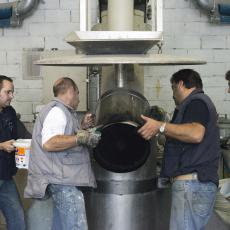 Against the imminent threat of liquidation, the workers of VIOME appeal for international solidarity.
|
 Imagine that the algorithmic heart of the "Sharing Economy" could be cloned and brought back to life under a different model of ownership and work conditions, as a humane alternative to the market.
|
 Britain in the 1970s was a period of crisis and polarisation. Workplace closure led to resistance by workers, which defined the relations between capital and labour for subsequent decades.
|
 An examination of the worker cooperative as an example of a labour commons. The authors suggest that the radical potential of co-ops can be extended by connecting with other commons struggles.
|
 An interview with members of a structure that provides solidarity financing for cooperatives and worker-run workplaces, to show the possibility of building a new economy.
|