

Get involved!
Help us expand the Workers Control Archive!
If you think you have some interesting text or content is missing:
Get in contact ›››
Recommended articles
 An essay that sketches out the most common microeconomic and organizational challenges that Argentina's recuperated workplaces face and maps out the “social innovations” being spearheaded by them.
|
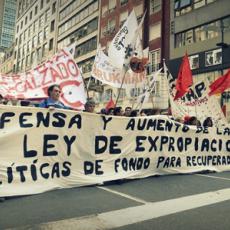 In Argentina, the government attempted to ‘institutionalise’ the occupied factories, de- politicising the radical aspects of workers’ actions in exchange for financial and technical assistance.
|
 Some currents argue that the experience of small-scale self-management under capitalism is useful preparation. However, self-management is impossible without real socialist democracy.
|
 A historical overview of the rise and decline of the farmers' cooperative movement in Greece, as well as some early examples of worker-occupied businesses before the turn of the century.
|
 Workers' management is not just a new administrative technique: it means that for the mass of people, new relations will have to develop with their work, the very content of work will have to alter.
|