
Get involved!
Help us expand the Workers Control Archive!
If you think you have some interesting text or content is missing:
Get in contact ›››
Recommended articles
 Workers’ self-management is associated with times of social transformation. The state may chose to either restrict self-management or facilitate it so the conflict is institutionalised and contained.
|
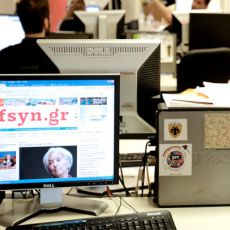 At the 'Journalists’ Newspaper', set up after 'Eleftherotypia' went bankrupt, all 150 media workers are paid the same, the editor works for free and circulation is soaring.
|
 Workers' management is not just a new administrative technique: it means that for the mass of people, new relations will have to develop with their work, the very content of work will have to alter.
|
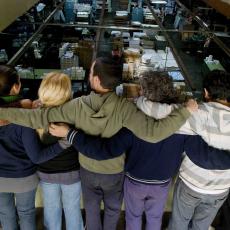 An essay that sketches out the most common microeconomic and organizational challenges that Argentina's recuperated workplaces face and maps out the “social innovations” being spearheaded by them.
|
 Dismantling the myth that the council communist tradition actually advocated a self-managed capitalist economy, rather than a truly communist one.
|
- 1 of 6
- ››